
Benjamin "HEXAN" Christensen: THE DEVIL'S CIRCUS & Lon Chaney in MOCKERY
After Christensen did the much-banned HEXAN: WITCHCRAFT THROUGH THE AGES he did 7 films in the U.S., dark and demented, sadly 3 are lost. Here is also the story of the director.

Benjamin Christensen was born in Viborg, Denmark, the youngest of twelve children. He initially studied medicine, but became interested in acting and began studying at the Det Kongelige Teater (Royal Danish Theatre) in Copenhagen in 1901. Christensen's professional career as an actor began in Aarhus in 1907, but he soon left the stage to become a wine salesman.
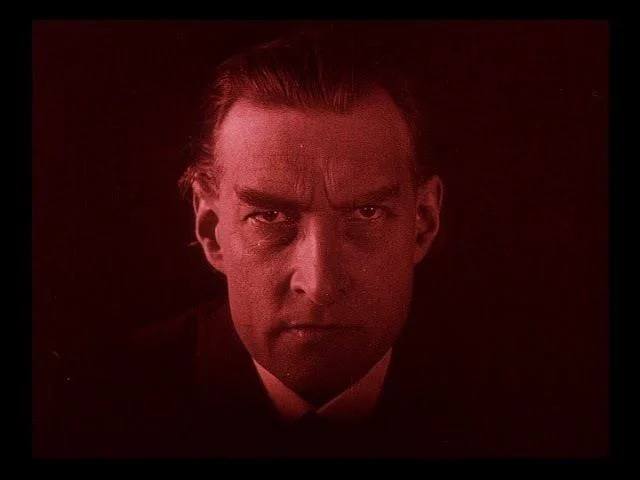
Photo: Benjamin Christensen
In 1911, Christensen made his debut as a film actor. All of his pre-directing efforts were lost, including Scenens børn (1913), the only film directed by the eminent Norwegian playwright and stage director Bjørn Bjørnson.
In 1913, Christensen took control of the small Hellborg-based production company for which he worked and reorganized it as Dansk-Biograf Kompagnie, making his directorial debut with Det hemmelighedsfulde X (The Mysterious X, 1914), a spy melodrama, with camerawork, editing, and art direction that was considered revolutionary for the time. Christensen himself played the title role, as in his second film, Hævnens nat (Blind Justice, 1916), in which he played a man wrongly accused of murder. Despite the success of his first two films, Christensen did not find acceptance within the Danish film industry and, after Blind Justice, returned to the theater.
Between 1918 and 1921, Christensen researched the history of necromancy as a background for his next major film, Häxan (Witches Through the Ages, 1922). Christensen appeared in the film in the role of Satan. An unplotted panorama of the history of witchcraft, Häxan used visual nudity, blood, and impact on a level that remains unusual for a silent film.
If you missed the film HEXAN, you can watch it here:
Despite harsh criticism from censorship bodies, Häxan was an international success. Following Häxan's response, Christensen received an invitation from the UFA to coach in Germany. He made two films for them, although his most memorable work in Germany was as an actor in the key supporting role of painter Claude Zoret in his compatriot Carl Theodor Dreyer's film Michael (1924). This would be Christensen's last film appearance as an actor.
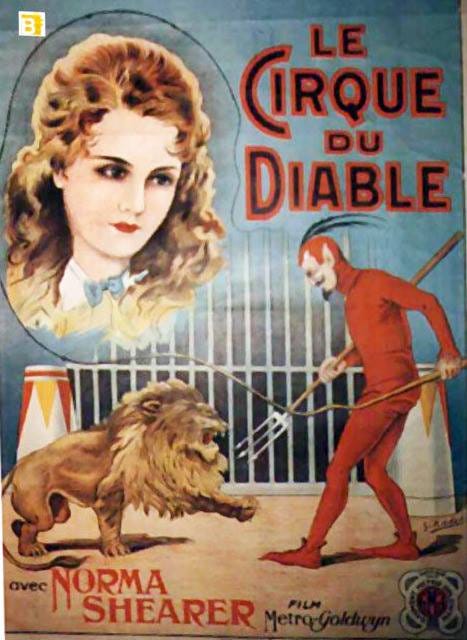
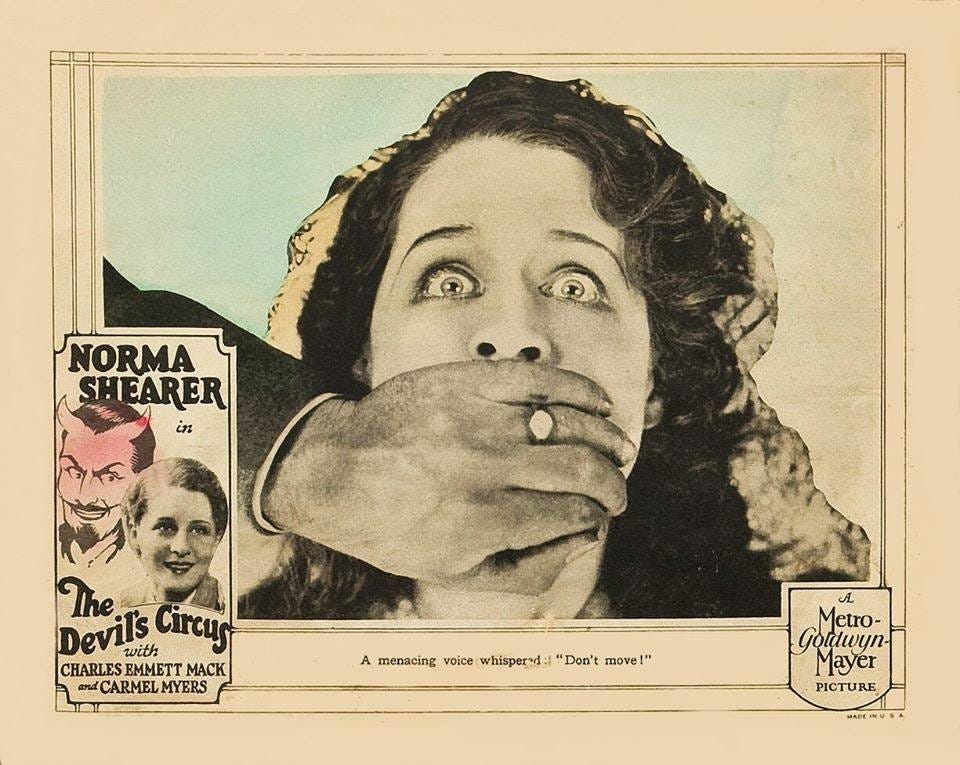
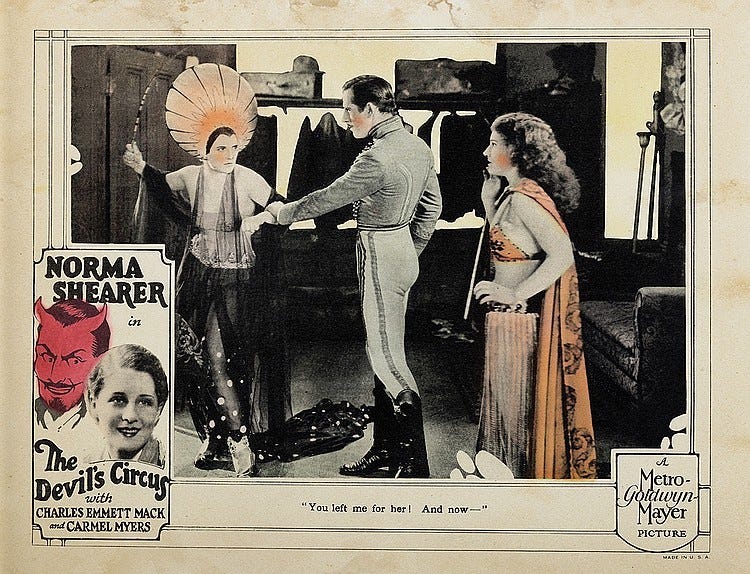
In 1924, MGM swept away UFA talent and signed, among others, Christensen, who left so quickly that he might not have finished his second feature film, Die Frau mit dem schlechten Ruf (The Woman of Ill Repute, 1925). The film was not released until late 1925, when Christensen had already disavowed the film. Christensen got off to a good start with Norma Shearer's film The Devil's Circus (1926), a commercial success. But Lon Chaney's film Mockery (1927) that followed was a scandalous critical failure, although it still generated modest profits.
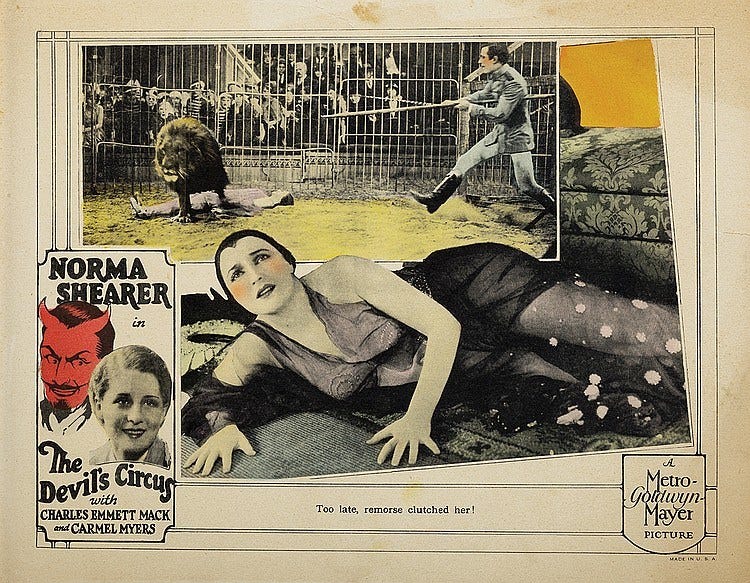
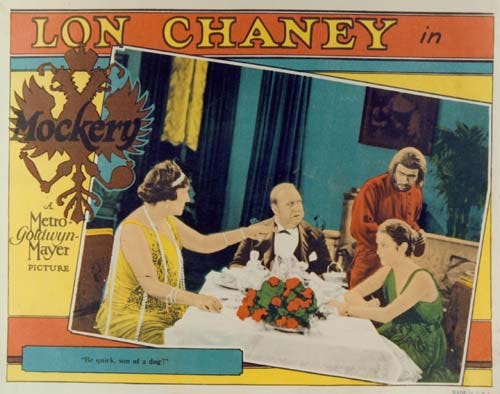
When the three-year production of MGM's The Mysterious Island (1929) stalled in 1927, Christensen was fired. He went to Warner Brothers, where he made four films. The first was The Hawk's Nest (1928), a crime drama starring Milton Sills. The remaining three constitute a horror trilogy and were co-written with Cornell Woolrich: The Haunted House (1928), Seven Footprints to Satan (1929), and House of Horror (1929). By then, Christensen was fed up with the Hollywood experience, and although House of Horror was a success, after it ended, he returned to Denmark.
A gripping silent drama, The Devil's Circus tells the tragic tale of a young woman who joins a circus, only to become entangled in a world of jealousy, betrayal, and misfortune. With stunning visuals and emotional depth, this film explores the dark side of human nature against the backdrop of the mesmerizing yet treacherous circus life:
MOCKERY is set during the civil war between White (aristocratic) and Red (Communist) Russians after the Russian Revolution of 1917. Sergei, a peasant in the Siberian countryside, is starving, and searching the dead bodies of victims of recent battle for something to eat (though when a dying man calls for water, he goes to give him some before realizing he has died). Countess Tatiana Alexandrovna, who is carrying dispatches for the White side, hails him, gives him food, and persuades him to escort her to the nearby town:
Afterwards, Christensen returned to stage directing and did not make another film for a decade. Breaking his silence, he wrote and directed for the Nordisk company Skilsmissens børn (The Children of Divorce, 1939), a social melodrama about the generation gap. It was a surprise success and Christensen seemed to be back on the path to success. He then directed Barnet (The Child, 1940), a film about abortion, and Gå med mig hjem (Come Home with Me, 1941), which reunited him with the actress Bodil Ipsen, who had appeared with him in Bjørnson's film and who was a director.
However, Damen med de lyse Handsker (The Lady with Light Gloves, 1942) was a spy thriller that turned out to be an absolute disaster, at the level of mockery, and Christensen found himself out of the movie business forever. Later, he took over the management of a cinema in a suburb of Copenhagen and lived the rest of his 79 years in obscurity. - Via Academia Lab
Hello and thanks for coming to this community. When sound came along, silents were forgotten. Color made many people not want to watch black and white. Fewer and fewer Best Films Ever Made lists at years end have any silent movies. It doesn’t take a fortune teller to realize what is coming with AI. The fear Hollywood has of stars images being used is nothing. AI is heading in the direction of writers being able to create the film as they write it. Once audiences are accustomed to it, not just silent films but ALL films made before AI will be forgotten.
I embrace AI because of the impact it will have on the arts. But I realize there is a downside. Not the hysteria of today, but the audience turning away from entertainment that has come before. I would like you to please consider subscribing, but also restack and repost the pages you like. Thanks.
Behind the paywall: Sealed Orders aka The Mysterious X (Det hemmelighedsfulde X) - Benjamin Christensen
In 1913, Christensen took control of the small Hellborg-based production company for which he worked and reorganized it as Dansk-Biograf Kompagnie, making his directorial debut with Det hemmelighedsfulde X (The Mysterious X, 1914), a spy melodrama, with camerawork, editing, and art direction that was considered revolutionary for the time. Christensen himself played the title role, as in his second film, Hævnens nat (Blind Justice, 1916), in which he played a man wrongly accused of murder.
